

How are snaps different from debs? This is a common question that comes up in technical discussions in the Linux community, especially among developers and users who have just embarked on their snap journey and are interested in learning more details. Indeed, the introduction of self-contained application format likes snaps has created a

We at Canonical care deeply about robotics. We firmly believe that robots based on Linux are cheaper to develop, more flexible, more secure, and faster to market. One of the contributing factors to this being the case is the Robot Operating System (ROS). ROS is by far the most popular middleware for creating Linux-powered robots.

In this blog post, we are going to introduce the concept of multi-tenancy in MAAS. This allows operators to have different groups of users own a group of resources (machines) without ever even knowing about other groups of users enabling enhanced machine utilisation. A common use case for medium and large-scale environments is to provide
After our series of post about ROS 2 CLI tools (1, 2), we continue exploring the ROS 2 realm taking a look at ROS 2 components and more specifically, how they compare to plugins. spoiler alert: Long story short, components are plugins. Short story long? Is that a thing? Well plugins and components are indeed
Android is the most popular mobile operating system and is continuing to grow its market share. IDC expects that Android will have 85.5% of the market by 2022, demonstrating that app development on Android will continue to be an in-demand skill. For developers looking to build Android apps, Ubuntu is the ideal platform in conjunction with

Sometimes, relationships just don’t work out. At first, it seemed that Xibo and Linux were made for each other. Xibo had a popular open source digital signage and player system, while Linux brought a community of enthusiastic users. Dan Garner of Xibo remembers why they broke up in 2015: “Releasing our player on Linux was

We’re excited to announce the release of MicroK8s 1.16 beta! MicroK8s is a lightweight and reliable Kubernetes cluster delivered as a single snap package – it can be installed on any Linux distribution which supports snaps or Windows and Mac using Multipass. MicroK8s is small and simple to install and is a great way to

Canonical announces full enterprise support for Kubernetes 1.16, starting with the beta release, with support covering the following installation mechanisms – kubeadm, Charmed Kubernetes, and MicroK8s. The beta release of Kubernetes offers users an opportunity to test some of the upcoming features and to validate containerised workloads

Newsletter signup
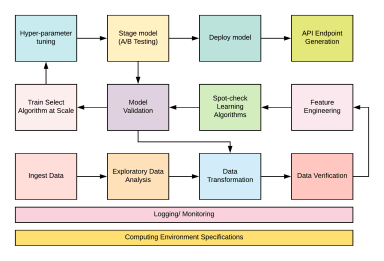
Kubeflow for Poets – This article introduces the core concepts necessary to understand all of the moving pieces in a Kubeflow based machine learning Pipeline. It includes a brief introduction to microservices, Docker, Kubeflow, Kubernetes, virtualisation, Google cloud and more. Read this article for step-by-step low level interaction with
We are excited to announce new Cilium and Helm add-ons, coming to MicroK8s! These add-ons add even more power to your Kubernetes environment built on MicroK8s. The Cilium CNI plugin brings enhanced networking features, including Kubernetes NetworkPolicy support, to MicroK8s. You’ll also get direct CLI access to Cilium within MicroK8s usin

Overall, most Linux distributions offer sane, reasonable defaults that balance security and functionality quite well. However, most of the security mechanisms are transparent, running in the background, and you still might require some additional, practical software to bolster your security array. Back in July, we talked about handy produ
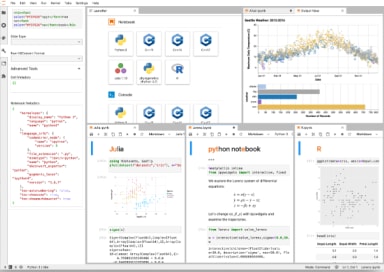
When users of your application range from high school students to expert data scientists, it’s often wise to avoid any assumptions about their system configurations. The Jupyter Notebook is popular with a diverse user base, enabling the creation and sharing of documents containing live code, visualisations, and narrative text. The app use
A well configured linter can catch common errors before code is even run or compiled. ROS 2 makes it easy to add linters of your choice and make them part of your package’s testing pipeline. We’ll step through the process, from start to finish, of adding a linter to ament so it can be used

How AI Is Changing The Game For Recruiting – In this use case spotlight, we review how machine learning toolkits like Kubeflow and AI are changing the recruiting industry. Talent acquisition is expensive, and getting it wrong is more expensive. AI can helping improve talent acquisition efficiency and effectiveness. From finding the right
This iteration was the Web & design team’s first iteration of the second half of our roadmap cycle, after returning from the mid-cycle roadmap sprint in Toronto 2 weeks ago. Priorities have moved around a bit since before the cycle, and we made a good start on the new priorities for the next 3 months.
Replicating Particle Collisions at CERN with Kubeflow – this post is interesting for a number of reasons. First, it shows how Kubeflow delivers on the promise of portability and why that matters to CERN. Second, it reiterates that using Kubeflow adds negligible performance overhead as compared to other methods for training. Finally, the p
Ubuntu tech blog
Deep dives for developers
Visit the Ubuntu Tech Blog for deep dives into product features, step-by-step tutorials, and the latest updates from Canonical's engineering teams.